

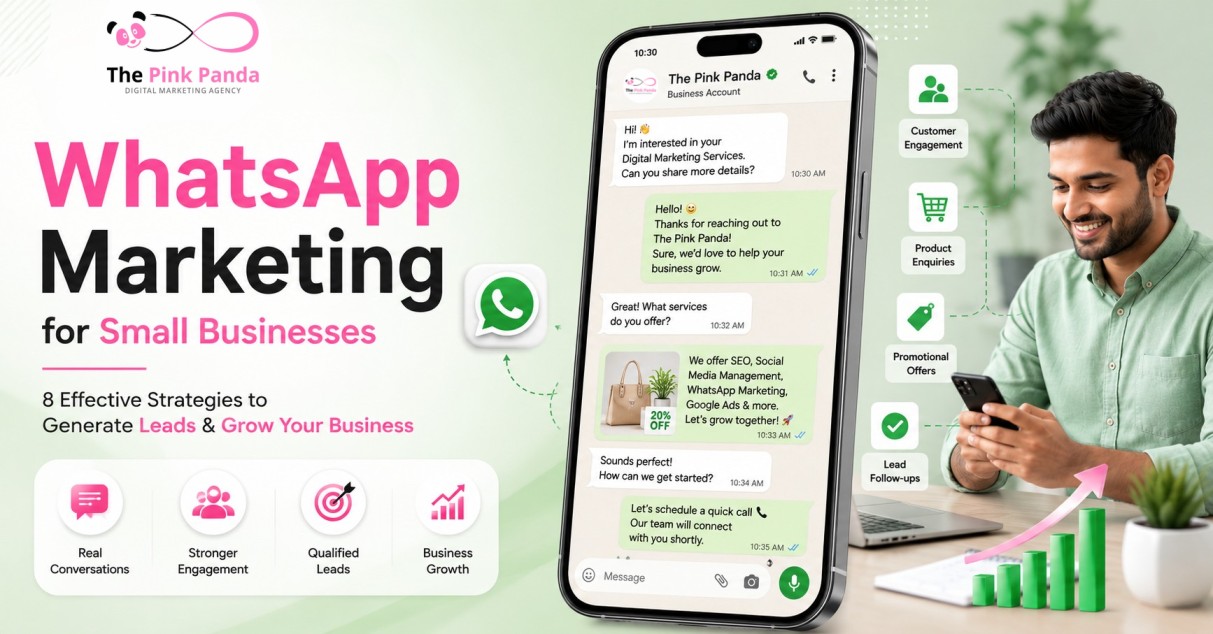
How to Create Effective WhatsApp Marketing Campaigns for Small Businesses?
WhatsApp has become an important communication channel for businesses that want to connect with customers directly. For small businesses, it can help generate leads, promote products, follow up with prospects, and build stronger customer relationships.
However, successful WhatsApp marketing is not about sending promotional messages to everyone. It is about reaching the right audience with the right message at the right time.
Here are 8 practical ways to create effective WhatsApp marketing campaigns for your business.
1. Define Your Marketing Goal
Before starting a WhatsApp campaign, decide what you want to achieve.
Your campaign could focus on:
- Generating new leads
- Promoting a product or service
- Increasing sales
- Bringing back existing customers
- Promoting special offers
- Getting appointment bookings
- Following up with enquiries
For example, a salon may use WhatsApp to promote a seasonal beauty package, while a real estate company may use it to follow up with property enquiries.
A clear goal helps you create a more focused campaign.
2. Target the Right Customers
Don’t send the same message to every customer.
Divide your audience based on their interests, previous enquiries, purchases, location, or customer stage.
For example, an online fashion store can create separate campaigns for:
- New customers
- Existing customers
- Customers interested in women’s clothing
- Customers interested in men’s clothing
- Customers who haven’t purchased recently
Targeted messages are more relevant and can generate better engagement.
3. Create Short and Engaging Messages
People don’t want to read long promotional messages on WhatsApp.
Keep your message:
- Short
- Clear
- Easy to understand
- Focused on one offer or idea
- Conversational
Example:
New Collection Alert!
Our latest festive collection is now available.
Explore the new styles today.
Reply “COLLECTION” to know more.
A simple message with a clear CTA can encourage customers to respond.
4. Personalize Your Communication
Personalized messages can make customers feel that the communication is relevant to them.
Instead of:
“Check out our latest offers.”
Try:
“Hi Priya! 👋 We thought you might love our new festive collection.”
Businesses can personalize messages using customer names, interests, previous purchases, or previous enquiries.
The more relevant the message, the more likely customers are to engage.
5. Use Offers, Updates & Valuable Content
WhatsApp marketing should not always be about selling.
Businesses can share:
- Special offers
- New product launches
- Product updates
- Educational content
- Useful tips
- Event invitations
- Limited-time deals
- Personalized recommendations
For example, a skincare brand could share skincare tips along with relevant product recommendations instead of sending promotional offers every day.
This helps build trust instead of making every conversation feel like an advertisement.
6. Add a Clear Call-to-Action
Every WhatsApp marketing message should tell the customer what to do next.
Examples:
- Book Your Appointment
- Get a Free Quote
- Shop Now
- Reply “YES” to Know More
- Schedule a Consultation
- Request Product Details
Avoid giving customers too many choices. Keep the next step simple.
7. Follow Up With Interested Leads
WhatsApp can be especially useful for following up with people who have already shown interest.
For example:
“Hi Rahul, just checking if you’d like to know more about our website development packages. We’d be happy to share the details.”
Instead of repeatedly sending promotional messages, use follow-ups to answer questions and move interested prospects toward a decision.
This can be particularly valuable for businesses with longer sales cycles, such as real estate, education, healthcare, B2B services, and financial services.
8. Track Your Campaign Results
Don’t run WhatsApp campaigns without measuring their performance.
Track important results such as:
- Messages delivered
- Customer responses
- Leads generated
- Enquiries received
- Appointments booked
- Sales generated
- Campaign ROI
For example:
1,000 messages → 150 responses → 50 qualified leads → 15 customers
These results can help you understand which messages, offers, and audiences are working best.
Which Industries Can Benefit From WhatsApp Marketing?
WhatsApp marketing can work across many industries, especially businesses that depend on customer enquiries, appointments, repeat purchases, or direct communication.
E-commerce & Retail
Online stores can use WhatsApp to promote new products, share offers, recover interested customers, and encourage repeat purchases.
Examples: Fashion brands, beauty stores, electronics retailers, jewellery businesses, grocery stores.
Healthcare & Clinics
Clinics and healthcare businesses can use WhatsApp for appointment enquiries, reminders, service information, and patient communication, subject to applicable privacy and healthcare requirements.
Examples: Dental clinics, diagnostic centres, dermatology clinics, physiotherapy centres.
Real Estate
Real estate companies can use WhatsApp to follow up with property enquiries, share property details, arrange site visits, and nurture potential buyers.
Examples: Property dealers, real estate agencies, builders, property consultants.
Education
Educational institutions and consultants can use WhatsApp to communicate with prospective students, share course information, admission updates, and counselling details.
Examples: Coaching institutes, colleges, universities, education consultants, skill-development institutes.
Beauty & Wellness
Salons and wellness businesses can use WhatsApp to promote packages, announce offers, manage enquiries, and encourage repeat bookings.
Examples: Salons, spas, beauty clinics, fitness studios, wellness centres.
Restaurants & Food Businesses
Restaurants can use WhatsApp to promote special menus, offers, events, reservations, and new products.
Examples: Restaurants, cafés, cloud kitchens, bakeries, catering businesses.
B2B & Professional Services
B2B companies can use WhatsApp for lead follow-ups, enquiries, quotations, consultations, and customer communication.
Examples: Digital marketing agencies, software companies, manufacturers, distributors, consultants, logistics companies.
Automotive
Automotive businesses can use WhatsApp to generate enquiries, promote offers, schedule service appointments, and follow up with potential buyers.
Examples: Car dealerships, bike dealerships, auto service centres, spare-parts businesses.
Final Thoughts
WhatsApp marketing can be a powerful growth tool for small businesses when it is used strategically.
The key is simple:
Right Audience + Relevant Message + Clear CTA + Consistent Follow-Up = Better Business Opportunities
Instead of simply sending more messages, focus on creating useful conversations that help customers make decisions.
With the right strategy, WhatsApp can support your business across lead generation, sales, customer engagement, and retention.
Frequently Asked Questions
1. Is WhatsApp marketing useful for small businesses?
Yes. It can help small businesses communicate directly with customers, generate leads, promote products, follow up with enquiries, and build customer relationships.
2. Which businesses can use WhatsApp marketing?
Almost any customer-focused business can benefit, including e-commerce, retail, healthcare, education, real estate, beauty, restaurants, automotive, and B2B services.
3. What type of messages should businesses send on WhatsApp?
Businesses can send relevant offers, product updates, useful information, appointment-related communication, event invitations, and personalized recommendations.
4. How can WhatsApp marketing generate leads?
Businesses can use WhatsApp links, QR codes, advertisements, website buttons, social media campaigns, and other opt-in channels to encourage potential customers to start a conversation.
5. How often should businesses send WhatsApp marketing messages?
There is no fixed frequency for every business. The focus should be on sending relevant and valuable messages without overwhelming customers.
6. Can WhatsApp marketing work for B2B companies?
Yes. B2B companies can use WhatsApp for enquiries, lead follow-ups, quotations, consultations, appointment scheduling, and customer communication.